
Feature
Joinable Data Marts
Skip the 6-month semantic layer project
Declare relationships between Data Marts once. Business users get blended data from Ads, CRM, and product — without writing SQL.
Get started freeRead the docs →
The analytics system teams trust
Marketplace users
175K+
teams running OWOX from the Google Workspace Marketplace
G2 rating
4.9
296 verified reviews on G2
Connector downloads
156K+
open-source connector installs via npm
GitHub stars
231
the platform is open source — star it, fork it, self-host it
One Layer, Two Audiences
The semantic layer without building one
Joinable Data Marts give analysts a lightweight way to declare relationships, and give business users the blended data they need — without anyone writing a line of SQL at query time.
THE ANALYST
Declare relationships, not a full data model
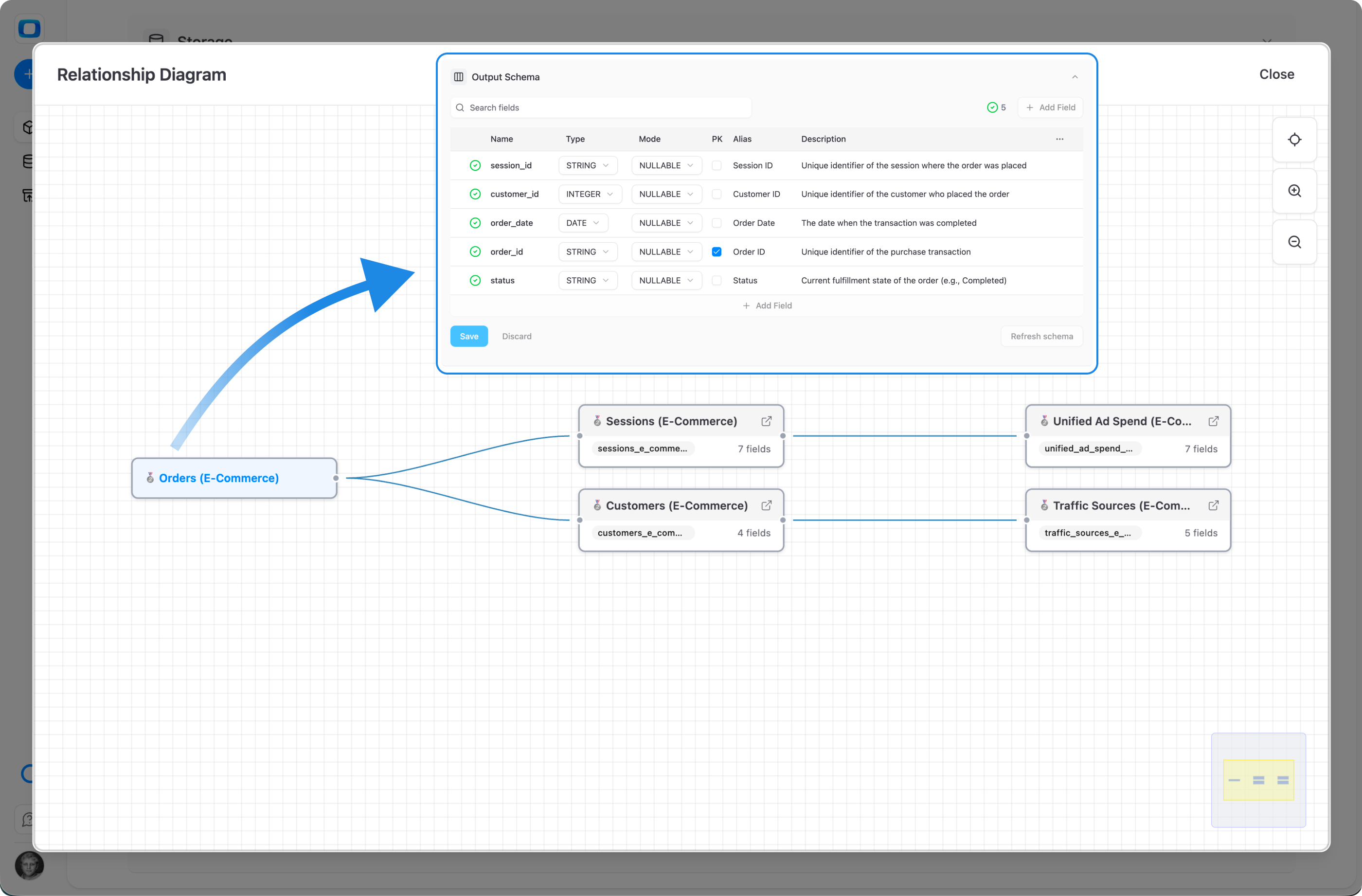
Pick two Data Marts, choose the join keys, set output aliases. That's it. No 200-page LookML repo, no central modeling team - just relationships that evolve with the business. Internal SQL is auto-generated with proper aggregation.
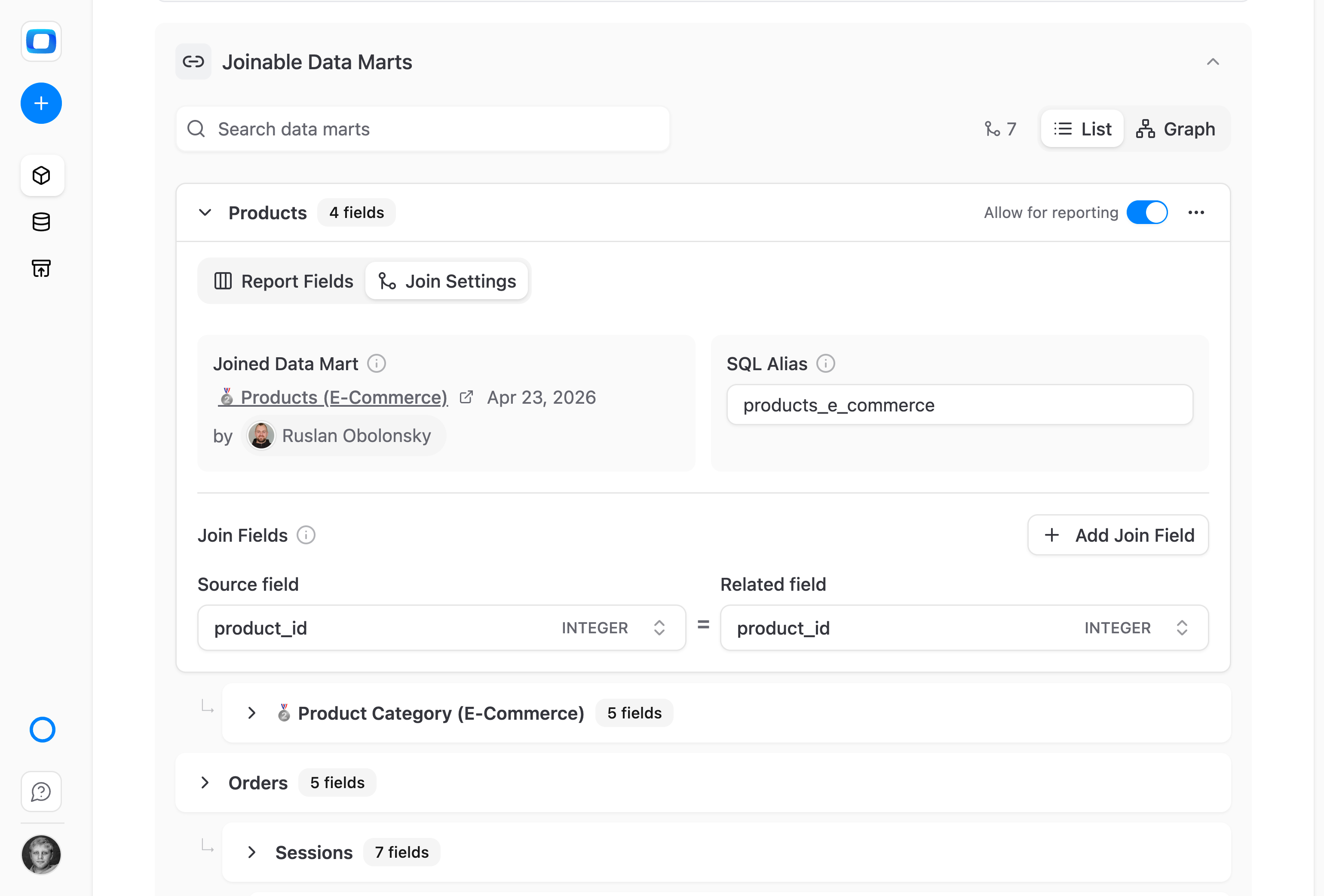
One join at a time. Always current. Never frozen.
THE BUSINESS USER
Just pick the columns you need
Native and joined fields appear in the same picker — in Google Sheets, Looker Studio, or AI prompts. Blend ads with CRM, marketing with sales, product with finance. The join happens behind the scenes.
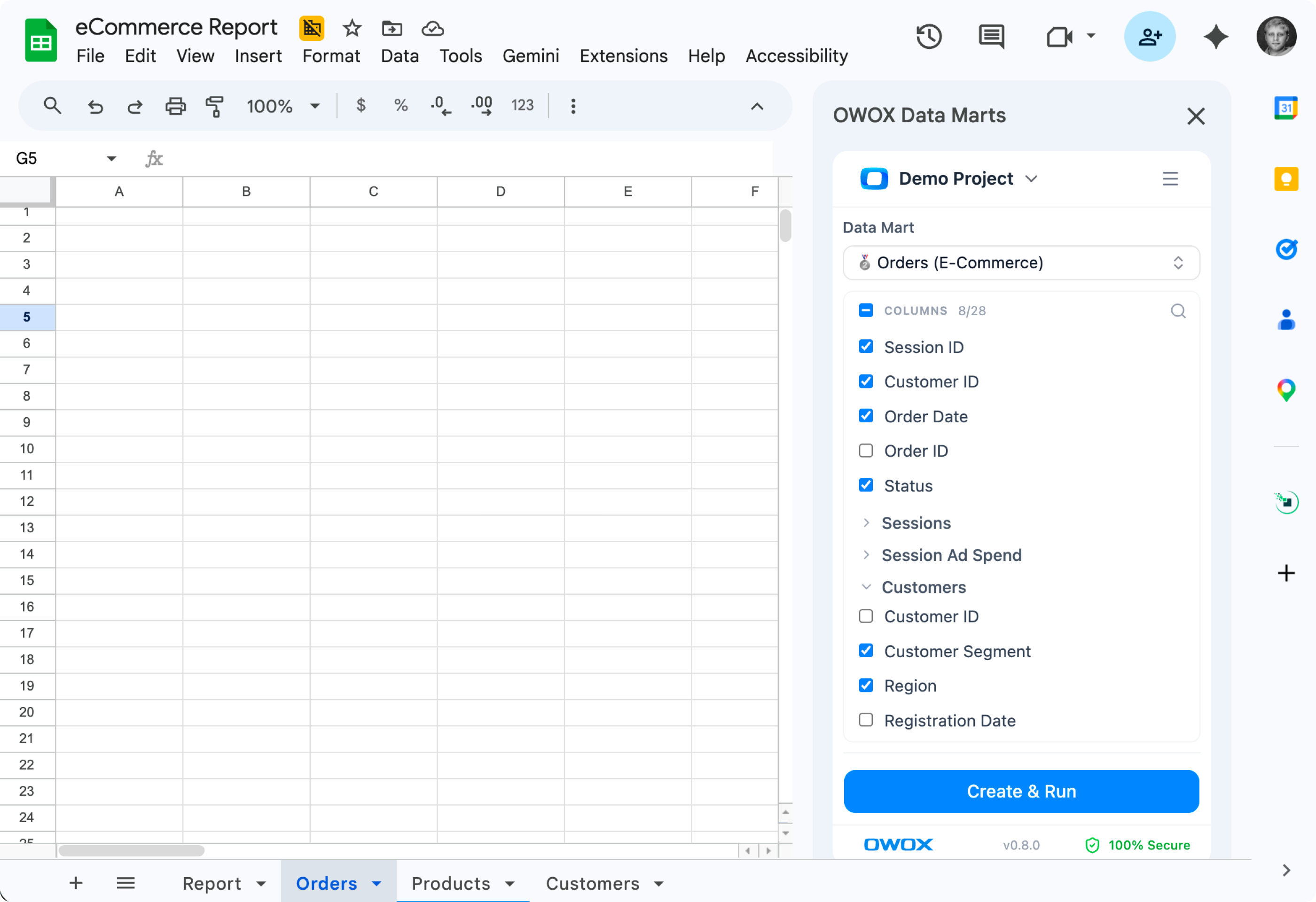
No SQL, no joins, no waiting on the data team.
Context layer that grows with your busines — New CRM field today? Add it to the Data Mart, expose it in the relationship, and every existing report can use it tomorrow. No quarterly modeling sprints.
For Data Teams3 use cases
For Data Teams
Declare relationships, not a full data model
Pick two Data Marts, choose the join keys, set output aliases. Relationships evolve with the business — no big-bang modeling project required.
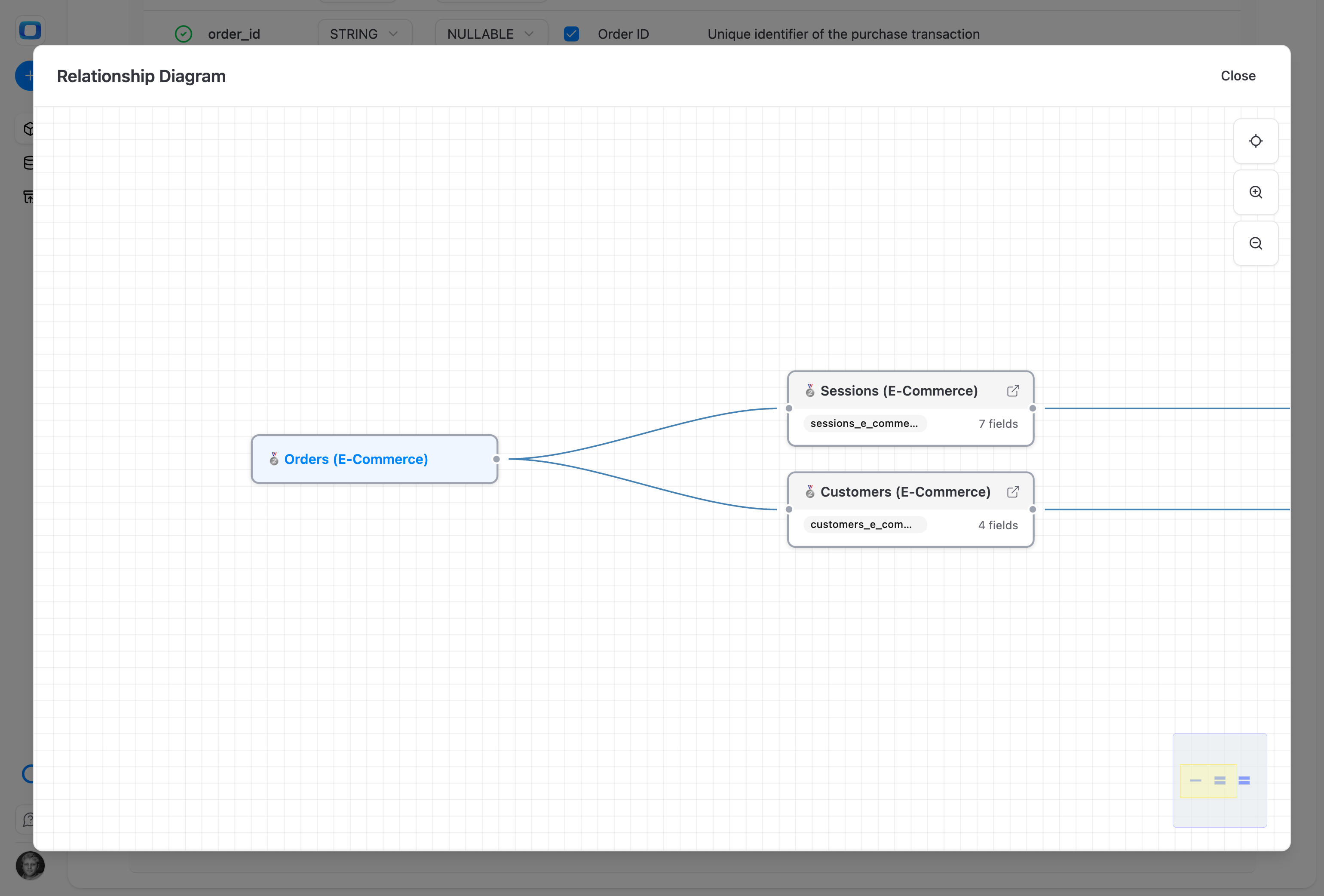
Skip the 6-month semantic-layer project
Traditional semantic layers take months to build and break the moment your data evolves. Joinable Data Marts give you the same outcome — incrementally, in days.
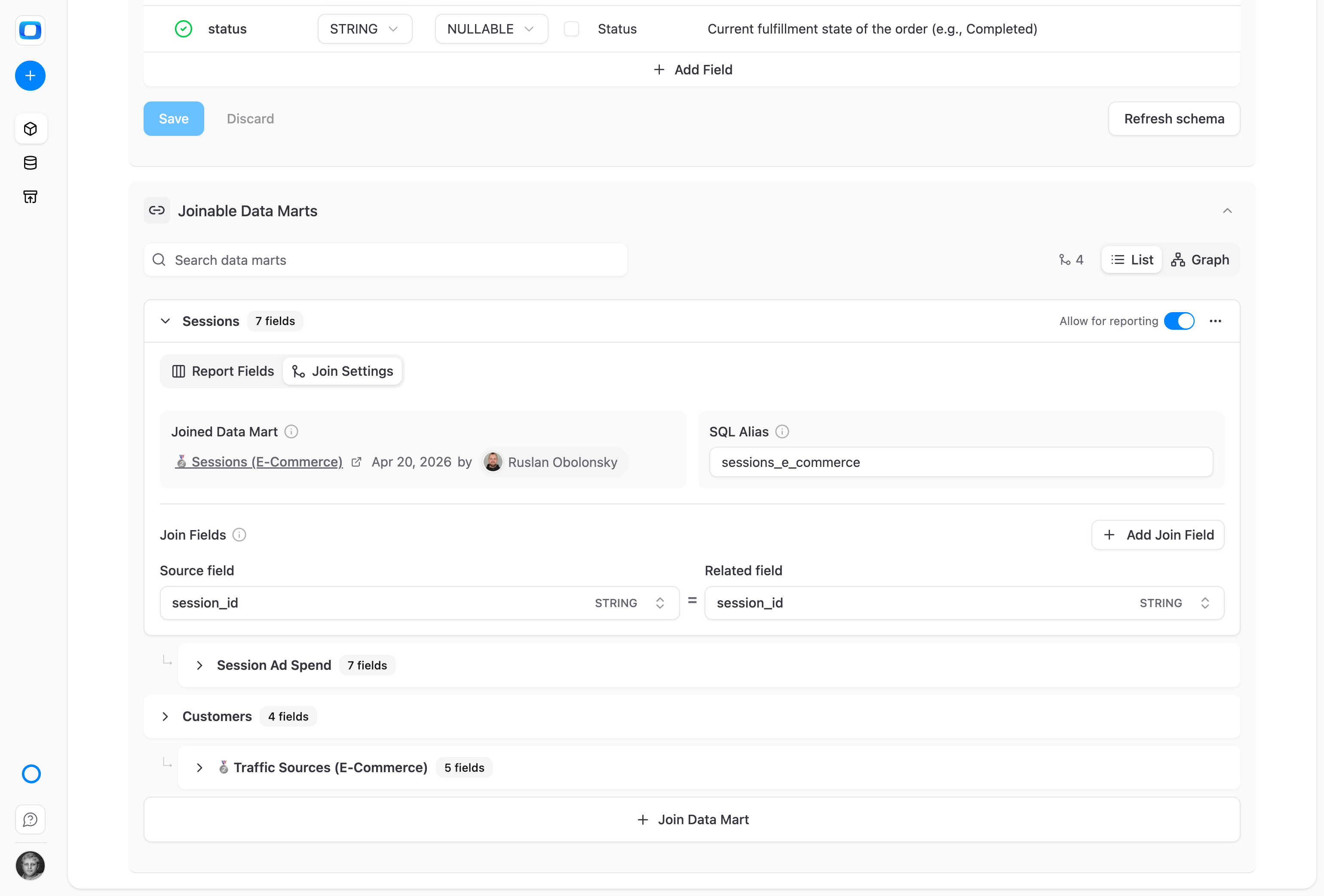
One join at a time — no big-bang data modeling
Pick two Data Marts, choose the join keys, and you're done. No 200-page LookML repo, no central modeling team — just relationships that match how your business already works.
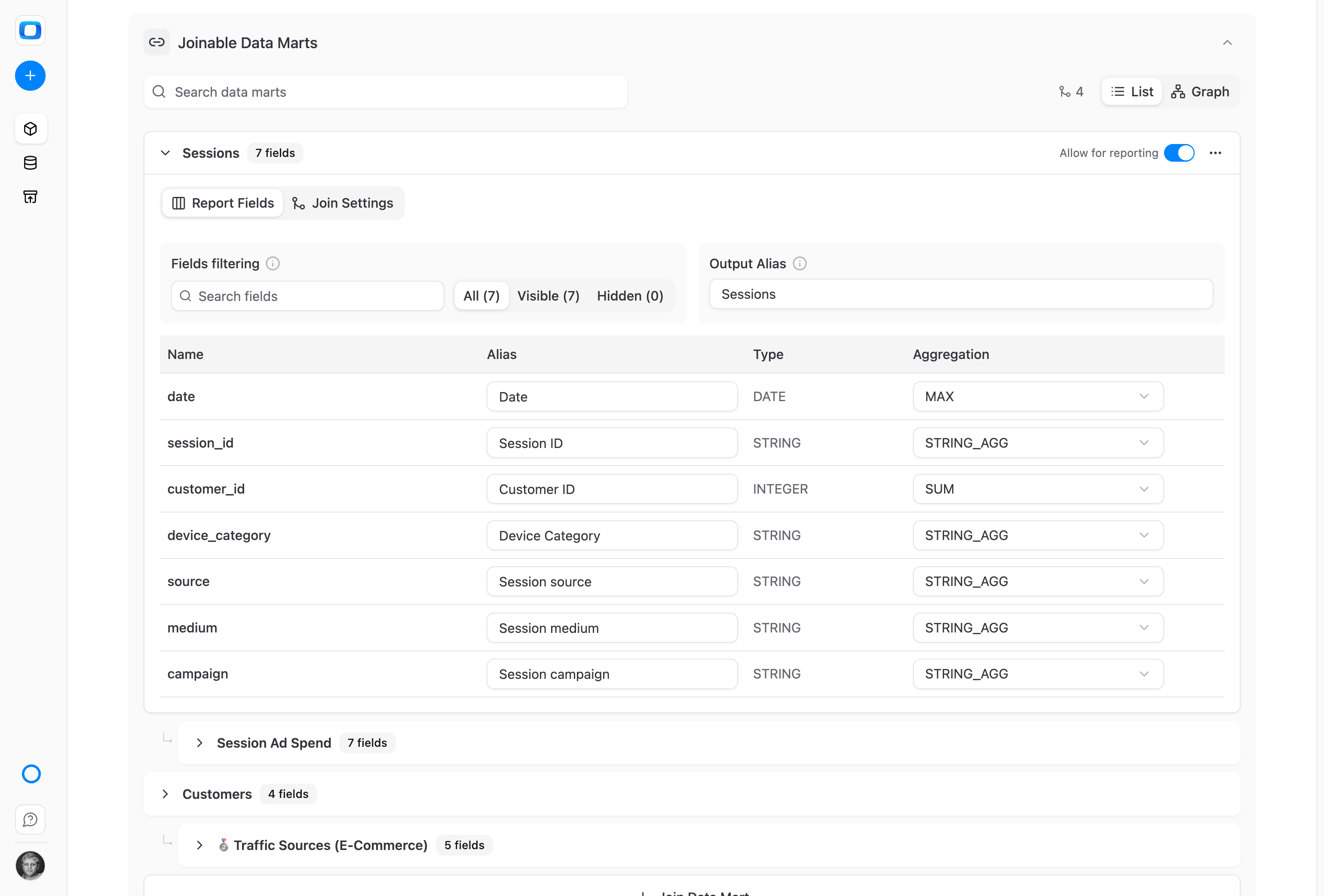
Business-friendly field names, built in
Set output aliases on each Data Mart and per-field overrides on joins. Consumers see "Campaign Cost" — not gads_campaign_cost_amt_usd_v2.
For Business Teams3 use cases
For Business Teams
Just pick the columns you need
Native and joined fields appear in the same picker. Blend ads, CRM, and product data — no SQL, no waiting on the data team.
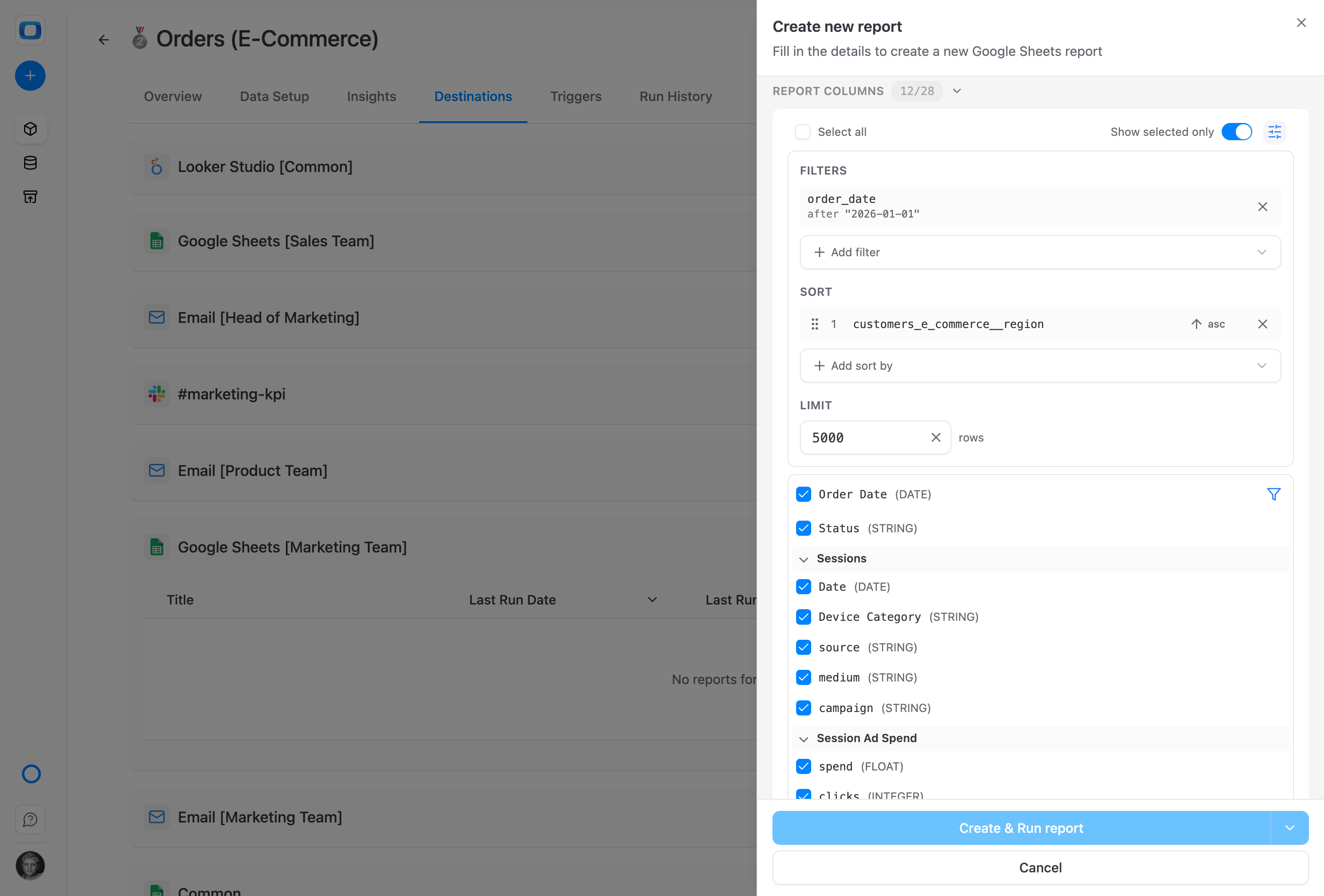
Blend ads, CRM, and product data — no SQL
Pull spend from your Ads Data Mart and matching pipeline from CRM into the same report. The join happens behind the scenes; you just pick the columns.
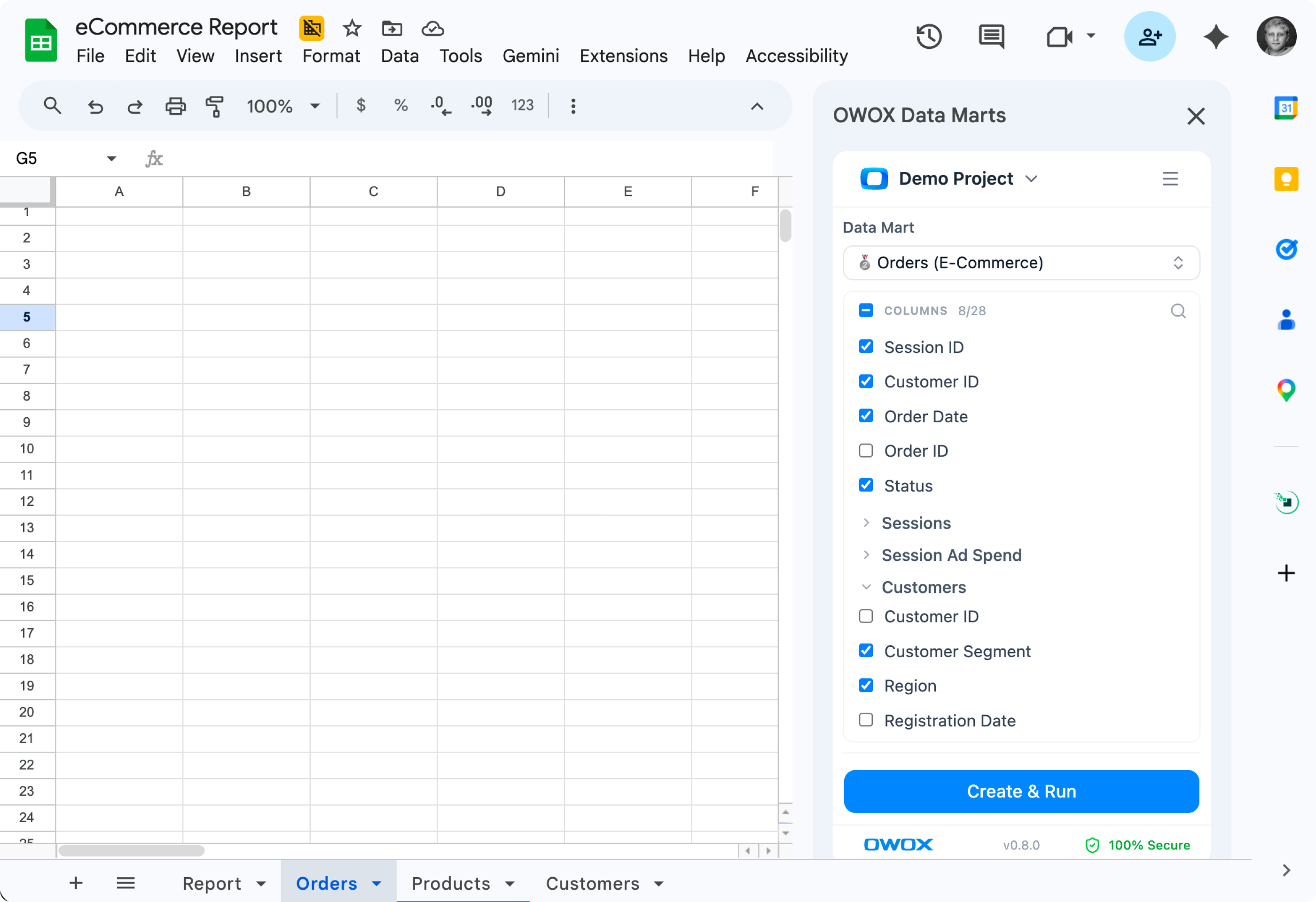
Just pick the columns you need
Native and joined fields appear in the same picker — in Google Sheets Extension, Looker Studio, or AI prompts. Just pick the columns you need; the join runs behind the scenes.
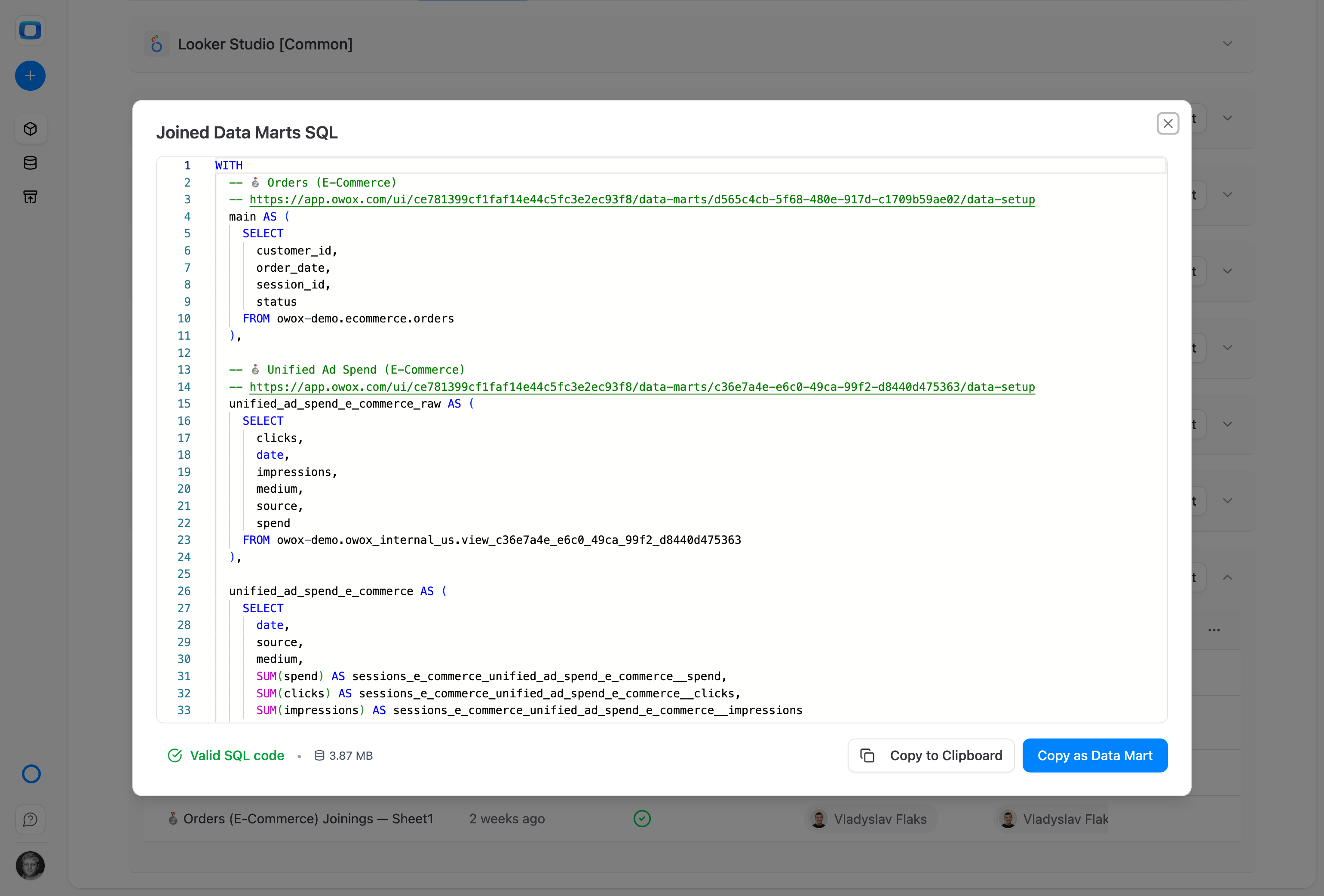
A semantic layer that grows with your business
New CRM field today? Add it to the Data Mart, expose it in the relationship, and every existing report can use it tomorrow. No quarterly modeling sprints.
Editions
Available in all editions
Reporting Analyst
Stop being the reporting bottleneck. Hire an Analyst that handles every "quick" question from stakeholders.
Starts at $65 /mo
Hire Reporting AnalystSenior Analyst
Stop running your business blind. Hire a Senior Analyst that unlocks trusted answers to every "why?"
Starts at $90 /mo
Hire Senior Data AnalystEnterprise
Scale self-service analytics with your governance rules and trusted context.
Let's Talk
Talk to SalesWhy teams pick OWOX
Everything business needs

Centralized metric definitions
Define KPIs once in a semantic layer and reuse them across reports, tools, and teams without rewriting logic.

One truth for every metric
Track revenue, CAC, margin, and more – from a single governed system that aligns every stakeholder.

Aligned decision-making
Make confident decisions faster, knowing everyone sees the same numbers and definitions.

Audit-ready reporting
Back every number with transparent, standardized logic – ready for stakeholder reviews or audits anytime.
FAQ
Frequently asked questions
What are Joinable Data Marts?
Joinable Data Marts let you declare relationships between two or more Data Marts on shared join keys. Once declared, joined fields appear in the same picker as native fields in any report — business users pick the columns they need without writing SQL.
How is this different from a traditional semantic layer?
Traditional semantic layers (LookML, Cube, dbt Semantic Layer) require building a complete model upfront — often a multi-month project that's outdated the moment your data evolves. Joinable Data Marts let you declare relationships incrementally, one join at a time, as the business needs them. No big-bang modeling sprint, no central modeling team.
Do business users need to write SQL?
No. Once a relationship is declared by the data team, business users pick joined fields from the same column picker as native fields — in Google Sheets, Looker Studio, or AI prompts. The join, aggregation, and aliasing happen behind the scenes.
What happens with 1-to-many joins?
OWOX automatically aggregates joined fields with the right function so a 1-to-many join never multiplies the rows of the main Data Mart. You can configure per-field aggregation (SUM, AVG, COUNT, MIN, MAX) and override aliases when needed.
Is the generated SQL transparent?
Yes. The internal SQL is generated for you, but it's fully visible — preview it inside the editor, or copy it out as a standalone SQL-based Data Mart at any point. No black box.
Which editions include Joinable Data Marts?
Joinable Data Marts are available in all editions, including the free Starter plan and Community self-managed edition.
What users are saying
Every claim has a receipt.
Real things real customers said — each quote pinned to a specific claim, straight from the quotes database.
 Nodari RizunFounder & CEO, Pürblack®
“AI, by the nature of the models, will hallucinate. And because of that, you need something which will create guardrails to ensure that there are no hallucinations, that you can trust your data.”
 Mark SimmonsCMO, Pürblack®
“We had six or seven different channels and no single source of truth — it was almost impossible, a lot of guesswork.”
Nodari RizunFounder & CEO, Pürblack®“We regained time. And time is the one resource that never comes back.”