
A/B Testing
What Is A/B Testing?
A/B testing compares two content versions - A and B to see which performs better based on engagement or conversion metrics.
A/B testing, also known as split or bucket testing, is a method for evaluating two versions of a webpage or app. Users are randomly shown either version A or B, and their behavior is tracked. The goal is to identify which version leads to better outcomes - like clicks, sign-ups, or sales using data and statistical analysis to guide improvements.
Key Benefits of A/B Testing
Key Benefits of A/B Testing
A/B testing helps you make smarter decisions by showing what really works for your visitors.
- Confirms or disproves assumptions with actual user data
- Avoids wasting time on low-performing content or layouts
- Increases time on site and boosts engagement
- Improves click-through and conversion rates
- Enhances user experience through tested changes
- Insights can be applied to similar pages sitewide
- Supports ongoing optimization based on clear results
Different Types of A/B Tests
Different Types of A/B Tests
Beyond basic A/B testing, there are several testing methods that help optimize websites at different levels.
- Split URL Testing: Compares entirely different web page URLs. Great for testing major design or backend changes.
- Multivariate Testing (MVT): Tests multiple page elements simultaneously to find the best combination. Ideal for advanced optimization.
- Multipage Testing: Tests changes across multiple pages, either as a full-funnel or with consistent elements like badges or CTAs.
Each method supports smarter, faster decision-making.
How to Conduct an A/B Test?
How to Conduct an A/B Test?
To begin an A/B test, review your current performance metrics to set a baseline. Define a clear goal - like improving clicks or conversions—and develop a hypothesis on how a specific change might help. Choose the area to test, create both the original (A) and variant (B) versions, and use a QA tool to ensure everything is set up correctly.
Once the test is running, monitor user behavior and collect data using web analytics tools. Analyze the results to see which version performed better. Apply the insights to improve your customer experience, optimize content, and increase your marketing effectiveness.
Common Mistakes to Avoid While A/B Testing
Common Mistakes to Avoid While A/B Testing
To get reliable results from A/B testing, it’s important to avoid these common mistakes:
- Skipping a clear hypothesis or testing plan
- Copying others’ tests without validating for your audience
- Testing too many elements at once
- Stopping tests before reaching statistical significance
- Using unbalanced or insufficient traffic
- Running tests for too short or too long
- Ignoring past results instead of iterating
- Overlooking external factors like holidays or sales
- Choosing low-quality testing tools
- Using basic A/B testing when split or multivariate testing is more appropriate
Real-world Examples of A/B Testing
Real-world Examples of A/B Testing
Homepage A/B Test
A homepage A/B test compares two versions of a website’s homepage to measure which one performs better in terms of user engagement, click-through rates, or conversions. This type of test helps identify which design, content, or layout changes lead to improved performance.
Pop-up A/B Test
A pop-up A/B test evaluates the effectiveness of different pop-up designs or messages by showing users two variations. The goal is to determine which version encourages more users to take a desired action, such as signing up, clicking through, or completing a purchase.
A/B testing is more than just a marketing technique - it’s a continuous process of improvement. By testing variations in content, layout, or functionality, businesses can make smarter decisions based on real user data.
When used consistently, A/B testing leads to better user experiences and measurable growth.
Introducing OWOX BI SQL Copilot: Simplify Your BigQuery Projects
Introducing OWOX BI SQL Copilot: Simplify Your BigQuery Projects
OWOX BI SQL Copilot helps you write, edit, and run SQL queries in BigQuery faster and with greater accuracy. Designed for marketers and analysts, it simplifies complex data tasks, reduces errors, and accelerates reporting- so you can focus on insights, not syntax.
Topics
Related terms



Related articles


Customer stories
Learn how teams ship analytics faster
Organizations that scaled analytics without scaling headcount
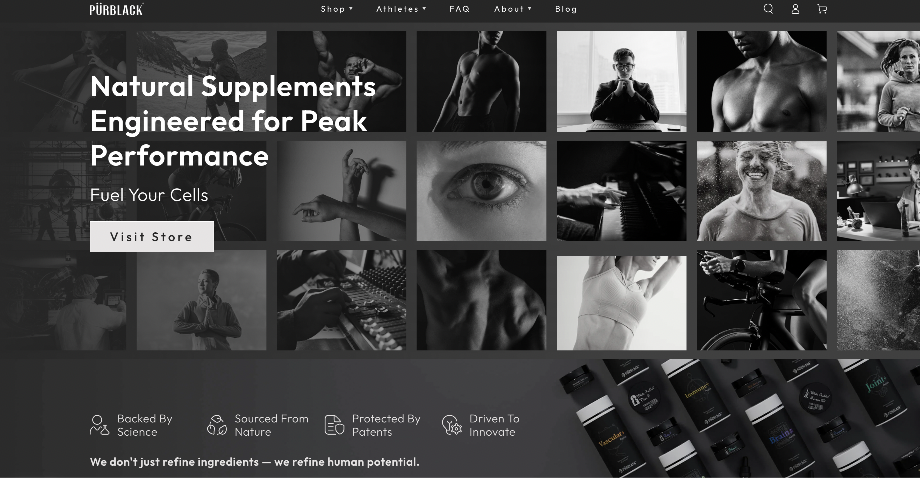 "For 10 years I was blind." The day Pürblack® founder stopped guessingSecondsto get reports across six channelsRead the story
  How OWOX Reports Helped Reformation Make Data-Backed DecisionsMinutesfrom data request to business decisionRead the story
  How OWOX Reports Streamlined Operations for WorkSimpli, Saving Over 10 Hours Weekly10hrs+saved per week on manual reportingRead the story
 What users are saying
Not testimonials. Comment threads.
Real things real customers said — each quote pinned to a specific claim, straight from the quotes database.
 Nodari RizunFounder & CEO, Pürblack®
“AI, by the nature of the models, will hallucinate. And because of that, you need something which will create guardrails to ensure that there are no hallucinations, that you can trust your data.”
Nodari RizunFounder & CEO, Pürblack®“I was blind, now I can see. OWOX opened our eyes.”
“We are extremely satisfied with the results achieved through our partnership with OWOX. I'm also impressed by quick and effective support we get from OWOX”