
Database Schema Lineage
What Is Database Schema Lineage?
Database schema lineage tracks how schema structures evolve over time across data systems.
It maps the flow of tables, fields, and relationships from one stage of a database’s lifecycle to another. This includes changes made during transformations, migrations, or updates. Schema lineage provides transparency for teams managing multiple environments or complex pipelines. It’s crucial for audit trails, troubleshooting, and understanding the full history of how a schema was built and modified.
Key Benefits of Database Schema Lineage for Modern Businesses
Key Benefits of Database Schema Lineage for Modern Businesses
Modern businesses benefit significantly from schema lineage tools. Key advantages include:
- Improved Governance: Clearly tracks who changed what and when, supporting audits and compliance.
- Faster Debugging: Helps trace schema issues across versions and environments.
- Better Collaboration: Teams can understand historical changes and dependencies.
- Data Trust: Lineage builds confidence in data accuracy by showing the evolution of schema logic.
- Informed Decisions: Enhances visibility into how data structures align with business objectives.
How Does Schema Lineage Work in Relational Databases?
How Does Schema Lineage Work in Relational Databases?
In relational databases, schema lineage works by capturing structural changes such as new tables, altered columns, or removed constraints. These changes are recorded as metadata or version histories.
Lineage can also track dependencies, like how a report relies on a specific table or how one schema is derived from another. Tools or scripts can automate this tracking, often integrating with version control or CI/CD pipelines to log schema updates systematically.
Clearing Up Schema & Data Lineage Misconceptions
Clearing Up Schema & Data Lineage Misconceptions
Many teams confuse schema lineage with data lineage, but they serve different purposes. Schema lineage tracks how the structure of a database changes, like modifications to tables, columns, or keys. Data lineage, on the other hand, follows how actual data moves across systems, including transformations.
Another misconception is that lineage can only be defined manually. In reality, modern tools use pattern recognition and metadata scanning to automate schema tracking. This automation supports consistency and reduces the risk of human error. Understanding these differences helps organizations implement both types of lineage more effectively.
Tracking schema lineage improves transparency, governance, and collaboration. It offers critical insights into how data structures evolve, especially in fast-moving environments. Whether you’re maintaining data integrity, debugging issues, or auditing changes, schema lineage offers a foundational layer of clarity for managing relational databases at scale.
From Data to Decisions: OWOX BI SQL Copilot for Optimized Queries
From Data to Decisions: OWOX BI SQL Copilot for Optimized Queries
OWOX BI SQL Copilot helps you manage schema logic in BigQuery with AI-powered suggestions, automated queries, and structure-aware validation. It reduces manual errors, improves SQL quality, and maintains visibility into how schema changes impact data flows, making it easier for analysts and marketers to build reliable, decision-ready queries.
Topics
Related terms
Related articles

Customer stories
Learn how teams ship analytics faster
Organizations that scaled analytics without scaling headcount
 "For 10 years I was blind." The day Pürblack® founder stopped guessingSecondsto get reports across six channelsRead the story
 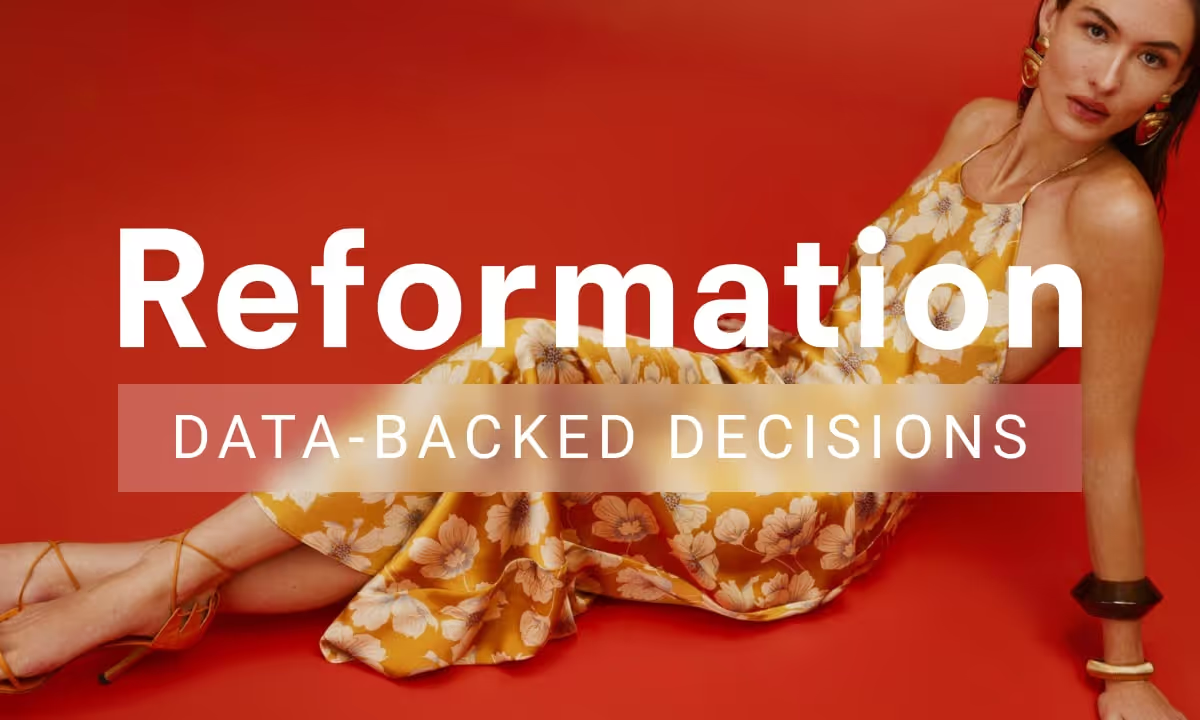 How OWOX Reports Helped Reformation Make Data-Backed DecisionsMinutesfrom data request to business decisionRead the story
  How OWOX Reports Streamlined Operations for WorkSimpli, Saving Over 10 Hours Weekly10hrs+saved per week on manual reportingRead the story
 What users are saying
Not testimonials. Comment threads.
Real things real customers said — each quote pinned to a specific claim, straight from the quotes database.
 Nodari RizunFounder & CEO, Pürblack®
“AI, by the nature of the models, will hallucinate. And because of that, you need something which will create guardrails to ensure that there are no hallucinations, that you can trust your data.”
Nodari RizunFounder & CEO, Pürblack®“I was blind, now I can see. OWOX opened our eyes.”
“We are extremely satisfied with the results achieved through our partnership with OWOX. I'm also impressed by quick and effective support we get from OWOX”