
What Is SQL Generation? Purpose & Examples
What Is SQL Generation?
SQL generation refers to the automated creation of SQL queries based on a user’s input or system needs.
SQL generation tools and models transform natural language or metadata into precise queries, eliminating the need to hand‑code complex SQL. This approach is commonly used in AI-powered analytics platforms to help users retrieve data more efficiently without deep SQL knowledge. It bridges the gap between business intent and technical execution.
How SQL Generation Works in Data Pipelines
How SQL Generation Works in Data Pipelines
In modern data pipelines, SQL generation transforms logical operations into efficient SQL queries that can be executed on a database. It starts with high-level instructions, either from user input, drag-and-drop tools, or a modeling layer. The system interprets these instructions and compiles them into SQL that aligns with the database’s syntax. This enables systems to push computations closer to the database, reducing data movement and speeding up analysis.
Key Ways SQL Generation Improves Performance
Key Ways SQL Generation Improves Performance
Automatically generated SQL enhances pipeline efficiency and execution by shifting more processing into the database layer. Here are some of the key benefits:
- Push-down processing: Executes transformations within the database instead of the application layer.
- Query optimization: Minimizes unnecessary operations, improving speed and resource usage.
- Cross-platform adaptation: Adjusts syntax based on the database dialect to avoid manual rewriting.
- Reduced compute costs: Streamlines queries, lowering overall resource consumption.
- Scalability: Supports large datasets and complex pipelines with optimized performance.
SQL Generation Examples in Practice
SQL Generation Examples in Practice
SQL generation is used in tools like SPSS Modeler or low-code platforms where users define data operations visually. For example, when a user filters customer data by region and calculates averages, the system auto-generates SQL like:
SELECT Region, AVG(Sales) FROM Orders GROUP BY Region;
This eliminates the need for users to understand SQL syntax while ensuring accurate, repeatable queries. It’s especially useful in ETL pipelines, dashboards, and self-serve reporting environments.
Best Practices to Optimize SQL Generation
Best Practices to Optimize SQL Generation
To get the most out of SQL generation:
- Keep operations clear: Use well-defined steps in modeling layers to generate accurate queries.
- Minimize nested logic: Complex nesting can reduce readability and performance.
- Leverage indexes: Ensure your tables are indexed to support the generated queries efficiently.
- Align with DBMS capabilities: Know your database’s strengths so that generated SQL runs optimally.
- Review and refine output: Inspect generated SQL occasionally to fine-tune performance.
SQL generation helps teams build reliable, consistent data workflows without manually writing complex queries. It empowers both technical and non-technical users to define logic at a high level, which the system then translates into SQL. This approach reduces dependency on engineers, enables faster iterations, and ensures query consistency across reporting layers. As part of a scalable analytics stack, SQL generation plays a central role in automation and efficiency.
Introducing OWOX BI SQL Copilot: Simplify Your BigQuery Projects
Introducing OWOX BI SQL Copilot: Simplify Your BigQuery Projects
OWOX BI SQL Copilot automates SQL generation for your BigQuery environment, turning business questions into efficient queries. It understands context, suggests best-fit syntax, and aligns with BigQuery’s native functions. Whether you’re creating models, pulling reports, or transforming data, SQL Copilot guides you with intelligent recommendations, reducing manual effort while keeping your pipeline clean and reliable.
Topics
Related terms
Related articles

Customer stories
Learn how teams ship analytics faster
Organizations that scaled analytics without scaling headcount
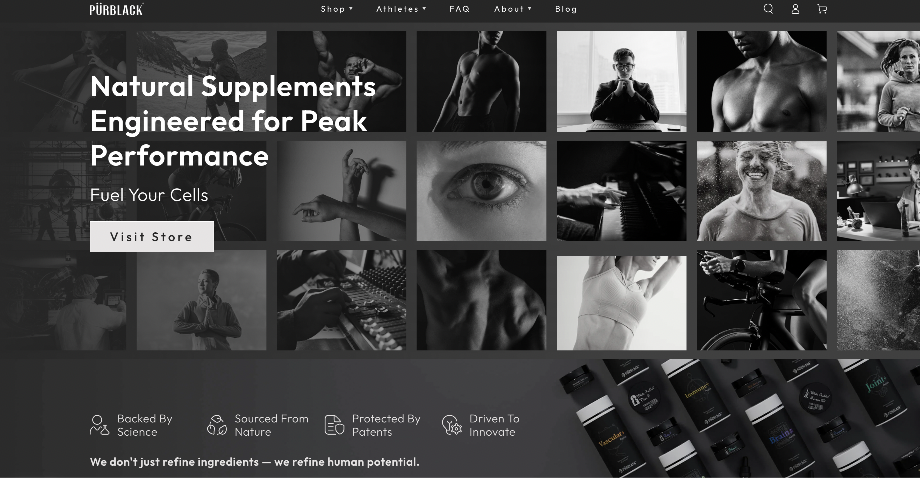 "For 10 years I was blind." The day Pürblack® founder stopped guessingSecondsto get reports across six channelsRead the story
  How OWOX Reports Helped Reformation Make Data-Backed DecisionsMinutesfrom data request to business decisionRead the story
  How OWOX Reports Streamlined Operations for WorkSimpli, Saving Over 10 Hours Weekly10hrs+saved per week on manual reportingRead the story
 What users are saying
Not testimonials. Comment threads.
Real things real customers said — each quote pinned to a specific claim, straight from the quotes database.
 Nodari RizunFounder & CEO, Pürblack®
“AI, by the nature of the models, will hallucinate. And because of that, you need something which will create guardrails to ensure that there are no hallucinations, that you can trust your data.”
Nodari RizunFounder & CEO, Pürblack®“I was blind, now I can see. OWOX opened our eyes.”
“We are extremely satisfied with the results achieved through our partnership with OWOX. I'm also impressed by quick and effective support we get from OWOX”