
What Is a Swappable Dimension?
What Is a Swappable Dimension?
A Swappable Dimension is a type of dimension in a data model that allows users to switch between multiple alternate versions of the same dimension at query time.
A Swappable Dimension represents different perspectives or hierarchies of the same data entity, giving analysts flexibility to view metrics from various analytical angles. This design helps simplify reporting across different organizational structures or business views.
Characteristics of Swappable Dimensions
Characteristics of Swappable Dimensions
Swappable Dimensions are designed to enhance analytical flexibility without duplicating entire datasets.
- Multiple Versions: Includes alternate hierarchies or versions of the same dimension, such as regional vs. product-based views.
- Query-Time Switching: Users can swap dimensions dynamically while running queries.
- Shared Fact Table: All versions connect to the same fact table for consistent results.
- Common Attributes: Maintains identical primary keys and core attributes across versions.
- Independent Hierarchies: Each version can have unique aggregation paths or rollups.
These characteristics enable organizations to maintain consistent data while supporting diverse analytical requirements.
Benefits of Swappable Dimensions
Benefits of Swappable Dimensions
Swappable Dimensions streamline analytics by allowing users to shift perspectives effortlessly.
- Flexible Analysis: Enables multiple views of data without restructuring fact tables.
- Time Savings: Reduces the need to rebuild or duplicate datasets for alternate reporting needs.
- Consistency: Ensures accuracy across all views using shared keys and logic.
- Scalable Design: Easily accommodates new hierarchies or business models.
- Improved Usability: Provides non-technical users with intuitive options to explore data.
By using swappable dimensions, organizations can quickly adapt reports to evolving business scenarios.
Implementation Techniques for Swappable Dimensions
Implementation Techniques for Swappable Dimensions
Implementing swappable dimensions involves maintaining synchronized dimension structures and joins.
- Direct Join Implementation: Creates a direct connection between fact and dimension tables, filtered by attributes like PartyType during query execution. In this setup, some columns remain empty depending on the selected type.
- Logical Views: Each view represents a version of the dimension, with its own structure—specific rows and columns based on business requirements.
Pros and Cons: Logical views are easy to manage and implement, offering consistent perspectives across reports. However, they can affect performance and require careful handling of access permissions for each view. - Physical Tables (Types and Sub-types): Uses separate tables for each dimension type or subtype.
Pros and Cons: Physical tables provide high performance and a more robust design. However, they can lead to data redundancy, possible key duplication during joins with fact tables, and increased ETL complexity. This approach offers excellent speed and structure but requires careful management to balance flexibility, minimize redundancy, and maintain consistency across all views and physical models.
Practical Examples of Swappable Dimensions
Practical Examples of Swappable Dimensions
Swappable Dimensions are especially useful in organizations with dynamic or multi-view analytics needs.
- Sales Analytics: Switch between product, region, or time-based hierarchies for different reporting contexts.
- Marketing Analysis: Compare campaigns using customer segments or geographic groupings interchangeably.
- Finance Reporting: Alternate between departmental and company-wide hierarchies for budgeting insights.
- E-commerce Operations: View data by product category, brand, or supplier without changing the fact model.
- Global Businesses: Analyze performance at global, regional, or local levels within one unified model.
These examples demonstrate how swappable dimensions create agility in decision-making and reporting design.
Manage Swappable Dimensions with OWOX Data Marts
Manage Swappable Dimensions with OWOX Data Marts
OWOX Data Marts Cloud simplifies managing swappable dimensions by allowing analysts to define alternate hierarchies and connect them to shared fact tables seamlessly. It supports dynamic modeling, automated schema updates, and unified data governance, making it easier to maintain flexible, business-ready data marts. With OWOX, teams can deliver consistent, on-demand insights across every reporting layer.
Topics
Related terms

Related articles
Customer stories
Learn how teams ship analytics faster
Organizations that scaled analytics without scaling headcount
 "For 10 years I was blind." The day Pürblack® founder stopped guessingSecondsto get reports across six channelsRead the story
 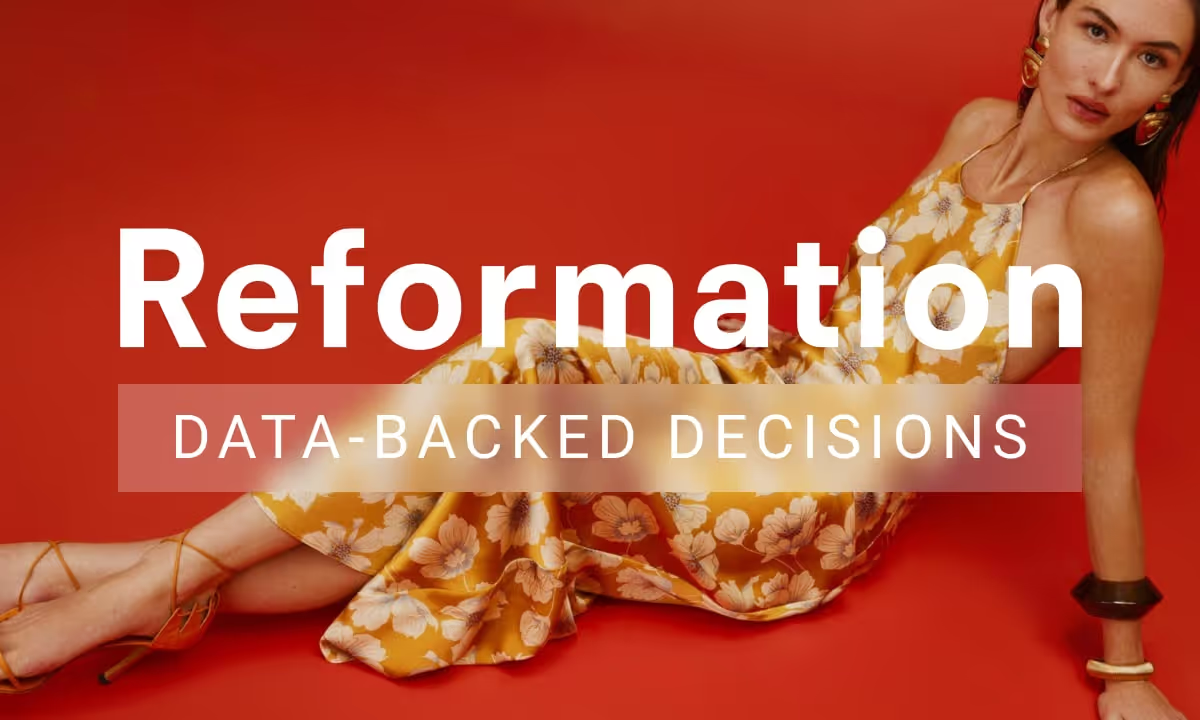 How OWOX Reports Helped Reformation Make Data-Backed DecisionsMinutesfrom data request to business decisionRead the story
  How OWOX Reports Streamlined Operations for WorkSimpli, Saving Over 10 Hours Weekly10hrs+saved per week on manual reportingRead the story
 What users are saying
Not testimonials. Comment threads.
Real things real customers said — each quote pinned to a specific claim, straight from the quotes database.
 Nodari RizunFounder & CEO, Pürblack®
“AI, by the nature of the models, will hallucinate. And because of that, you need something which will create guardrails to ensure that there are no hallucinations, that you can trust your data.”
Nodari RizunFounder & CEO, Pürblack®“I was blind, now I can see. OWOX opened our eyes.”
“We are extremely satisfied with the results achieved through our partnership with OWOX. I'm also impressed by quick and effective support we get from OWOX”